A Complete Guide to Risks, Process, Checklist & Practical Standards
At first glance, mommy bags (also called diaper bags or maternity bags) seem like simple fabric-and-hardware products. But they’re directly tied to family safety, customer experience, and marketplace compliance. A thorough, independent pre-shipment third-party inspection by a qualified third party can catch hidden defects before your goods leave the factory—saving you from returns, poor reviews, and shipment rejections.
This comprehensive guide explains why need the third-party inspection matter, what to check, how to organize the process, how much it costs, and how to set up the third-party inspection standards. A ready-to-use checklist and AQL reference are included—ideal for exporters, private labels, and e-commerce sellers alike.
6 Key Reasons You Should Always Do a Third-Party Inspection
- Minimize returns and negative feedback: Common issues like broken zippers, strong odors, uneven stitching, or tearing straps are easily caught before shipping.
- Ensure regulatory and platform compliance: Markets such as the US (CPSIA/Prop 65), EU (REACH/Annex XVII), and China have strict rules on heavy metals, phthalates, azo dyes, and sharp edges. 🧪
- Verify mass production matches the approved sample: Confirm color, fabric weight, plating tone, logo position, and accessories are consistent.
- Control schedule and cost: Early detection of problems prevents last-minute delays, rework, and warehouse rejections.
- Maintain objectivity: Third parties are independent of the manufacturer, offering unbiased evaluation based on data and standard criteria.
- Data-driven improvement: Results aren’t just “pass/fail” — defect data can improve materials, workmanship, and supplier management.
When and What Type of Inspection to Choose
- Initial Production Check (IPC): Inspect raw materials and first finished samples — essential for new suppliers.
- During Production Inspection (DUPRO): Check goods when 30–60% completed; correct deviation before it’s too late.
- Pre-Shipment Inspection (PSI): Inspect when ≥80% of goods finished and 100% packed — your last line of defense. ✅
- Container Loading Check (CLC): Verify quantity, labeling, and packaging during container loading; prevent mix-ups or short shipments.
For first orders, choose IPC + DUPRO + PSI. For repeat orders, DUPRO (if needed) + PSI + CLC often suffices.
What to Third-Party Inspection for Mommy Bags (Step-by-Step)
Appearance & Workmanship
- Stitch consistency and density, backstitches on stress points, loose threads
- Fabric scratches, bubbles, discoloration, dents; plating loss or scratches on hardware; logo placement accuracy
Dimensions & Structure
- Overall size, number and size of pockets, zipper length, strap length, interior lining bonding
Functionality
- Zipper smoothness, magnetic button strength, Velcro adhesion
- Thermal pocket insulation, accessibility of bottle pockets and wipe slots
- Water-repellency quick test (observe minor splashes for leakage)
Durability & Reliability Tests (common reference)
- Zipper cycle: 100–200 cycles per zipper, no blockage or deformation
- Load test: 10–15 kg static load for 30 min, no seam tearing or hardware deformation
- Drop test: multiple edges/sides from packaging height (ISTA 1A style)
- Stress test on hooks or D-rings for tensile resistance
Safety & Chemical Preliminary Checks
- Sharp edges or small detachable parts that pose choking hazards
- Unusual or pungent smell (indicates possible volatile chemicals)
- Colorfastness (dry/wet rub) to prevent staining baby items
Accessories & Packaging
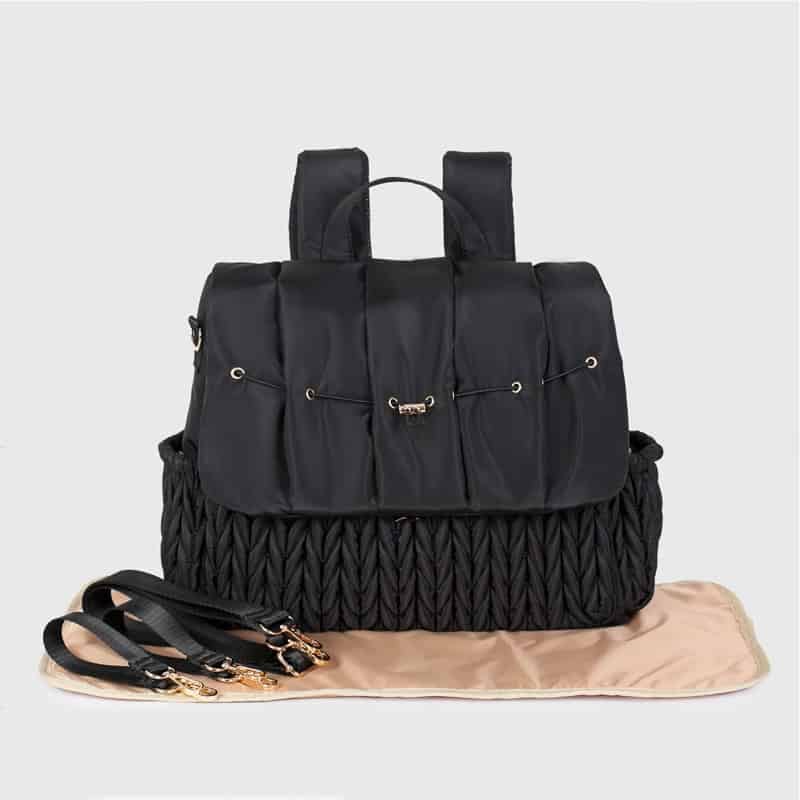
- All items complete: changing pad, bottle holder, keychain, straps
- Barcode/FNSKU, SKU label, carton markings, packing list
- Warning texts (e.g. suffocation alerts) printed clearly 📦
Documentation Verification
- Match golden sample, technical sheet, color card, BOM, and certificates (RPET/GRS if applicable)
Compliance & Chemical Regulations (By Market)
United States
- CPSIA: Lead limit and phthalate restrictions for “child care articles” used by children under 3 years. Although most mommy bags are adult items, any part directly in contact with infants should meet these stricter standards.
- California Prop 65: Requires warnings if chemical substances exceed limits.
European Union
- REACH SVHC & Annex XVII: Restricts phthalates, azo dyes, PAHs, and nickel release from metal parts.
China & Local Standards
- Reference QB/T and GB/T for luggage, handbags, and leather goods—include physical strength and colorfastness. If used near infants, consider EN 71-1 small parts and shape safety methodology.
Packaging & Environmental Responsibility
- For Germany (LUCID), France (Triman), and other EPR regions, register and label according to local extended producer responsibility regulations.
(Note: This information is for general guidance only and not legal advice. Always confirm based on your product’s classification and target market.)
AQL Sampling and Acceptance Criteria
Recommended inspection level: General Level II (ANSI/ASQ Z1.4)
Typical AQL:
- Critical defects: 0
- Major defects: 2.5
- Minor defects: 4.0
Example: For a batch of 1,200 pcs → sample size 125 pcs; Major defects AQL 2.5 means accept 7, reject at 8.
Defect classification reference
- Critical: Safety/legality issues (sharp hardware, loose small parts, metal needles, intense chemical odor)
- Major: Function/performance or visible appearance defects (zipper split, torn seams, broken handle, color mismatch)
- Minor: Slight appearance flaws (minor stitch misalignment, small removable stains, non-visible scratches)
Document these definitions in supplier contracts to avoid disputes.
Cost, Timing & Operational Tips
- Typical cost: USD 180–300 per man-day (varies by region and depth of service)
- Lead time: Usually 48–72 hours from booking to report
- Preparation: Provide golden sample, artwork, color card, purchase order, and packaging details
- Timing: Conduct PSI after ≥80% finished, ≥100% packed; if earlier, label as “ongoing production check.”
- If failed: Provide Corrective Action Plan (CAPA) with photos/videos before re-third-party inspection.
Ready-to-Use Pre-shipment Checklist for Mommy Bags
Basic Info
- PO/style/color/quantity/shipping date
- Approved sample version and sign-off date
Appearance & Dimensions
- Fabric color match (ΔE tolerance)
- Major dimensions and strap length
- Stitch density (stitches per inch), backstitching, clean thread trimming
Function
- Zipper smoothness (main, front, internal)
- Buckle/magnet/Velcro attachment strength
- Water-repellent test (splash for 5 minutes)
- Inner lining adhesion
Durability
- Static load 10–15 kg, 30 mins, no issues
- Zipper test 100–200 cycles
- Reinforced seams at stress points
Safety & Chemical Checks
- No sharp edges, loose small parts
- Acceptable smell
- Dry/wet rub colorfastness
Accessories & Packaging
- Changing pad, bottle holder, hooks complete
- SKU/FNSKU/barcode, carton marking, box quantity, gross/net weight
- Plastic bag thickness & suffocation warning in proper language
Documentation & Compliance
- Material declaration, test reports (CPSIA/REACH/GRS etc as applicable)
- Platform-specific labeling verified
FAQ — Your Common Questions Answered
- Is a mommy bag a children’s product?
Usually it’s classified as an adult product. But if it includes items directly contacting infants (like pacifier holders), stricter chemical limits apply. - Is a Pre-Shipment Inspection enough?
For first orders or new suppliers, combine IPC/DUPRO to catch issues early. PSI alone only shows final results. - What AQL level should I choose?
Common: Critical 0 / Major 2.5 / Minor 4.0. For premium brands, lower major to 1.5. - Can the third-party inspection replace lab tests?
No. On-site third-party inspection cover visual, mechanical, and basic functional checks; chemical compliance needs certified lab testing. - How long and how much?
Typically 48–72h turnaround, priced per man-day depending on location and complexity. - Can I do remote/video inspection?
Some agencies offer video third-party inspection—okay for low-risk repeat orders. First orders still require onsite visits. - What if it fails?
Document corrective actions, implement fixes, and only ship after re-inspection approval.