This article is written by Hangzhou Wonder Import and Export Co., Ltd. As a vertically integrated supplier specializing in mother and baby travel bags for over 13 years, we hope to help brand owners and e-commerce sellers truly understand the logic behind diaper bag MOQ and find the most suitable procurement solution for their development stage.
1. What is MOQ? Why Do Factories Have Minimum Order Quantity Requirements?
Minimum Order Quantity (MOQ) refers to the minimum product quantity or minimum order amount that a manufacturing factory or raw material supplier can accept in a single production run.
For structurally complex, multi-functional diaper bags, factory-set diaper bag MOQ often confuses many startup brands or new buyers preparing to test the market: “Why can’t I just order 50 pieces? I just want to test the market first.” Why does the unit price double when the order quantity decreases?
The answer to this question isn’t about “factory inflexibility,” but rather a very real industrial logic— production startup costs.
🎯 Key Point: What is Diaper Bag MOQ Really About?
Diaper bag MOQ isn’t a number randomly quoted by sales managers, but rather a production break-even point calculated through precise calculations based on a series of objective hard indicators such as:
- Raw material procurement thresholds
- Mold costs and pattern development fees
- Machine calibration losses
- Labor assembly efficiency
Simply put, the core purpose of factories setting MOQ for custom diaper bags is to control the production cost of individual products within a market-acceptable range, making the business economically viable.
2. In Diaper Bag Manufacturing, What Factors Determine the Level of MOQ?
Compared to ordinary bags, custom diaper bags typically integrate more functions. To realize these functions, they require more complex structures and therefore involve more different types of materials, such as various functional fabrics, linings, accessories, hardware, etc.
Therefore, when manufacturing factories accept custom diaper bag orders, they must meet the minimum quantity restrictions of multiple production stages upstream and internally.
(1) Material Factors: Fabrics, Linings, Accessories and Hardware
This is the most core factor affecting diaper bag MOQ.
Manufacturing factories don’t produce fabrics, zippers, or hardware themselves, but purchase them from specialized material suppliers. Taking fabrics as an example:
Textile mills or leather factories typically sell fabrics in “whole rolls”—for example, 300 yards per roll. If a single diaper bag consumes 1 yard of fabric, then one roll of fabric locks in an MOQ of 300 single-color diaper bags.
More critically is color customization. If you request a custom diaper bag in a special color, the textile mill needs to prepare a dye vat specifically for you for dyeing, and dye vats have minimum capacity requirements. The fabric dyed from one vat is often only enough to make 250 to 300 bags. If you only order 100 pieces, the remaining fabric batch can only be stored as factory inventory—this cost will ultimately be calculated into your unit price.
In addition to the main fabric, diaper bags also involve:
- Linings (lining fabrics)
- Aluminum foil insulation cotton
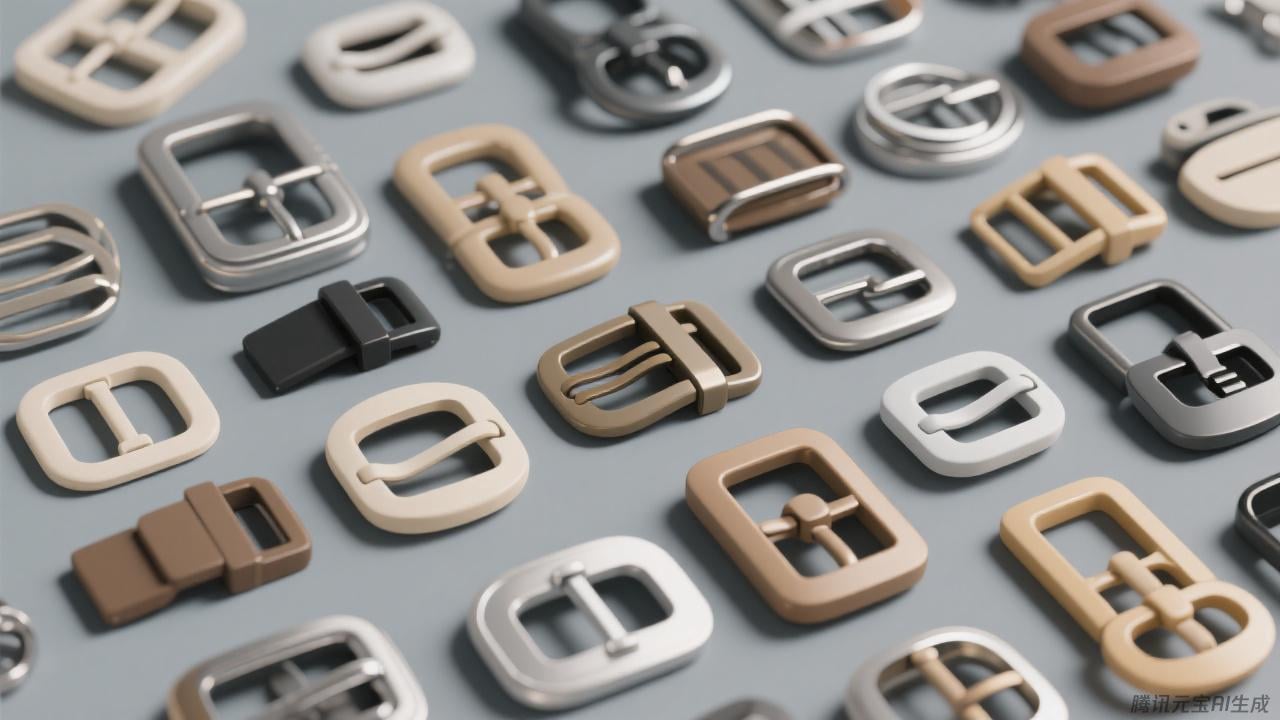
- Hardware components (zippers, buckles, hooks)
- High-elasticity mesh pockets
- High-grade anti-slip zippers
- Specialized brand jacquard webbing
Each type of accessory has its own procurement MOQ. If any accessory cannot meet the minimum order quantity, the entire bag cannot be produced.
💡 Key Insight: For common main materials or accessories (such as standard fabrics, universal zippers and hardware that factories keep in stock year-round), factories usually have a certain amount of inventory and can support lower MOQ diaper bag orders. So the conclusion is simple: “The more customized and specialized your requirements, the higher the diaper bag MOQ.”
(2) Fixed Cost Amortization: Mold Making, Pattern Development and Equipment Debugging
Before mass production begins, factories must do a lot of preparatory work—the time and material costs of this work are unrelated to order size.
Because diaper bags have many pockets and compartments, they usually require designing dozens of fabric cutting pieces of different sizes and making steel cutting dies to cut the fabric. In addition, before cutting begins, factories need to use CAD software for precise material layout, and technical workers spend several hours adjusting various machine parameters, as well as trial sewing and making pre-production samples.
These processes bring material loss and debugging costs. These costs don’t change with order quantity; debugging 10 bags and debugging 1,000 bags takes exactly the same time and scrapped materials.
📊 Cost Amortization Example:
These fixed fees (pattern fees, printing screen fees, brand metal label mold fees, cutting die fees) are all one-time expenditures. Assuming these fees add up to 3,000 yuan (approximately $420 USD):
| Order Quantity |
Fixed Cost Per Unit |
Impact on Price |
| 50 pieces |
60 yuan ($8.40) per bag |
Very High ❌ |
| 500 pieces |
6 yuan ($0.84) per bag |
Moderate ✅ |
| 1,000 pieces |
3 yuan ($0.42) per bag |
Optimal ⭐ |
This is why small MOQ orders have exorbitantly high unit prices—because the degree to which fixed costs are diluted is completely different.
(3) Material Waste: “Hidden Waste” in Small Batch Cutting and Procurement
During mass production, factories can stack many layers of fabric together for simultaneous cutting, and through layout algorithms, make cutting pieces fit tightly together, achieving fabric utilization rates above 85%.
But small batch cutting isn’t so ideal. Because there aren’t enough cutting layers and width is limited, the proportion of edge waste significantly increases, and fabric utilization often drops to around 60%. This extra fabric waste can only be calculated into the cost of this small batch of products.
The price difference between bulk procurement and small batch procurement of raw materials alone can reach 30-50%, plus additional logistics costs—each link is pushing up the unit price for low MOQ diaper bag orders.
(4) Labor Efficiency Loss: The Cost of the “Learning Curve”
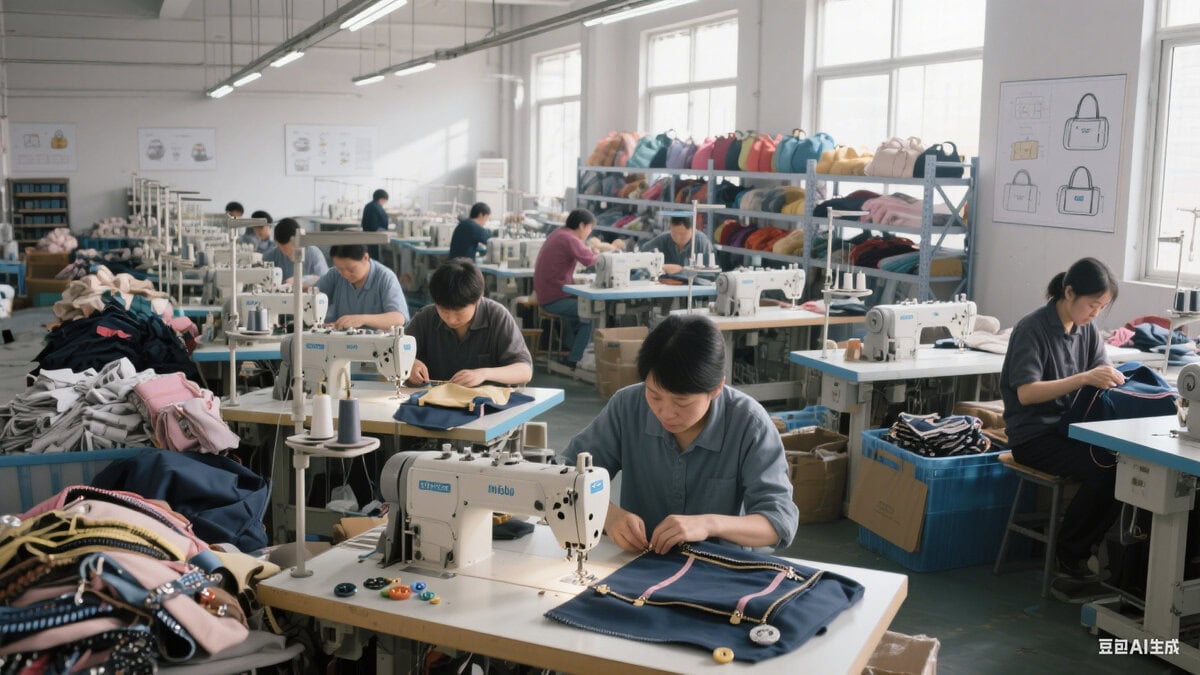
Diaper bags are labor-intensive products, requiring dozens of workers to cooperate on assembly lines. When a production line switches from Style A to Style B, the entire workshop must stop—redistribute materials, adjust workstations, teach workers new sewing techniques. This production downtime not only wastes labor but also means the factory has zero output during that period.
More critically is the “learning curve” issue. Sewing a structurally complex diaper bag (involving dozens of processes), workers are very slow at the beginning due to unfamiliarity and poor process coordination. When they finally get the hang of it, small batch orders may already be finished—resulting in extremely low average output per worker for the entire batch.
The factory certainly won’t absorb this loss themselves and can only factor it all into processing fees. In contrast, with large batch orders, a worker may do the same process for months or even years, becoming extremely proficient with much higher output per unit time.

3. How Does Order Quantity Affect Unit Price? A Set of Data Makes It Crystal Clear
To help everyone more intuitively understand the impact of order quantity on procurement costs, we introduce two concepts from economics: “Marginal Cost (MC)” and “Average Total Cost (ATC)”.
Simply put, marginal cost is the total cost the system incurs for each additional bag produced. Average total cost is total cost (fixed costs plus variable costs) divided by total output.
In the bag manufacturing industry, fixed costs remain basically unchanged, while variable costs (fabric, labor, utilities, etc.) gradually decrease with increased output due to bulk purchasing discounts and improved worker proficiency.
Below we use a set of simulated data to look at the unit price change trajectory for a standard custom water-resistant oxford cloth diaper bag (with multi-layer functional pockets and brand printing):
| Order Quantity (pcs) |
Fixed Preparation Cost (yuan) |
Unit Variable Cost (yuan) |
Average Total Cost (Unit Price) /yuan |
Price Decrease Margin |
| 50 |
3,000 |
~65 |
125 |
— |
| 100 |
3,000 |
~60 |
90 |
↓ 28% |
| 200 |
3,000 |
~55 |
70 |
↓ 22% |
| 500 |
3,000 |
~48 |
54 |
↓ 23% ⭐ |
| 1,000 |
3,000 |
~45 |
48 |
↓ 11% ⭐ |
| 2,000 |
3,000 |
~43.5 |
45 |
↓ 6% |
*(The above is industrial simulation data, designed to demonstrate the mathematical logic of cost dilution for diaper bag MOQ)*
📈 Three Key Price Zones for Diaper Bag MOQ:
🔴 Stage One: High Fixed Cost Rapid Dilution Zone (50-200 pieces)
The 3,000 yuan fixed preparation cost spread over a very small quantity makes average fixed costs very large. At this point, producing one more bag significantly lowers the overall unit price. Increasing from 100 to 200 pieces drops the unit price from 90 yuan to 70 yuan—a 22% decrease.
🟢 Stage Two: Supply Chain Golden Sweet Spot (500-1,000 pieces) ⭐⭐⭐
At around 500 pieces, fabric procurement just uses up a complete batch of roll materials (almost no excess waste), and worker proficiency reaches its peak. In this range, the unit price drops from 54 yuan to 48 yuan—a still significant decrease (about 11%). This is the “best value-for-money order range” for custom diaper bag MOQ.
🔵 Stage Three: Diminishing Marginal Returns Zone (2,000+ pieces)
Fixed cost allocation has approached zero, and the only remaining space for price reduction comes from bulk material discounts and logistics integration benefits. But because labor wages and equipment capacity are fixed, the margin for price improvement becomes smaller and smaller, with the curve gradually flattening.
4. Hangzhou Wonder’s Diaper Bag Custom MOQ Policy
As a vertically integrated manufacturing factory specializing in mother and baby travel bags for over 13 years, Hangzhou Wonder Import and Export Co., Ltd. has formulated differentiated custom diaper bag MOQ policies that both comply with industrial manufacturing principles and maintain high flexibility, based on deep understanding of production realities and awareness of pain points for brand owners at different growth stages.
| Custom Solution Type |
Target Buyers & Scenarios |
Core Custom Content |
Minimum Order Quantity (MOQ) |
Delivery Time |
Quality Standards |
| New Pattern Design Customization (ODM/OEM) |
Mature mother-baby brands, overseas bulk wholesalers, merchants needing design barriers |
Complete proprietary pattern development, custom technical fabrics, specialized functional compartments and brand custom hardware |
Standard: Single style 500 pcs (can customize 2 colors);
Upgrade: Single style 600 pcs (can customize 3 colors) |
Sample: 7-14 working days;
First bulk order: 30-35 working days;
Reorders: 20-30 working days |
BSCI, ISO9001, SGS standards; 100% online quality inspection + 10%-30% shipping inspection; 1-year warranty |
| Existing Style Quick Customization |
Amazon/Shopify startup sellers, mother-baby media, crowdfunding product testing |
Based on 600+ ready-stock styles, add Logo printing, embroidery or heat transfer modifications |
Single color single style 200 pcs (some styles 100 pcs) |
Quality sample from stock;
Under normal scheduling: 25-30 working days |
Same as above |
| Ready-Stock White Label Procurement (Packaging Only Custom) |
Sellers hoping to quickly build product matrix, test multiple styles |
Direct procurement of white label ready stock, customize only hang tags, packaging, wash labels, etc. |
Single style 20-50 pcs |
Stock ships immediately;
Packaging customization: 7-10 working days |
Same as above |
Why is New Customization MOQ 500 pieces?
From the analysis in Section 3, we know this number isn’t randomly set but comprehensively determined considering:
- Raw material procurement requirements
- Fixed cost amortization efficiency
- Customer total investment capacity
- Market price acceptance
Taking high-density polyester oxford cloth as an example, the minimum single order quantity for textile dyeing factories for specific color dye vats, converted down, is approximately 250 to 300 pieces. A base of 500 pieces means you can customize 2 colors (250 pieces each), providing diversified color choices without incurring additional dyeing vat waste fees.
Meanwhile, at this scale, the pattern and cutting die fees for complex diaper bags with over 30 cutting pieces are diluted to very low levels per bag, and factory unit prices are competitive enough in the international market.
Why Can Existing Style Light Customization Achieve 200 pieces?
Because of our year-round focus on the diaper bag field, we’ve accumulated production data and cutting dies for over 300 hot-selling styles. Some fixed costs have been diluted by previous orders. If only modifying logos, etc., we only need to add custom logo film screen costs or embroidery template fees to start machine processing, bringing single batch production costs to an acceptable range.
Additionally, for some hot-selling styles, we also accumulate orders from different customers for centralized production—a single run of 1,000-2,000 diaper bags only requires logo changes with limited cost increases. This allows our customers to minimize upfront investment while still accessing lower MOQ diaper bags.
5. In Practice, How to Lower Custom MOQ While Maintaining Price Advantages?
After understanding the causes of diaper bag MOQ, let’s look at some truly actionable cost-reduction methods:
(1) Choose Universal or Ready-Stock Materials
Many buyers start the design phase wanting exclusive colors or premium fabrics, but this directly encounters the extremely high dyeing MOQ from upstream textile factories.
Practical Suggestion: Proactively ask the factory for a list of their year-round stock standard fabrics—such as high-density polyester oxford cloth ($1.50-4.00 per yard) or standard nylon fabric ($2.00-6.00 per yard). Using these ready-made materials bypasses textile factory order thresholds.
The same logic applies to linings and hardware. Traditional genuine leather linings or exclusive custom linings are expensive, whereas lining materials like Peach Skin Velvet are soft, easy to clean, lighter than genuine leather, and in thousand-piece scale orders can save about $1 per bag.
💰 Cost Savings: For hardware, abandon stainless steel or brass pieces requiring high mold fees, and switch to mature supply chain “common mold” zinc alloy hardware with vast selection—avoiding mold fees while allowing small MOQ batches to enjoy bulk pricing.
(2) Control Color Quantity: Fewer Colors, Lower MOQ
This is a very direct and important principle: the more colors in a single order, the more times the factory must switch lines and change colors during production, the lower labor efficiency, and naturally costs rise.
Conversely, fewer colors mean lower order thresholds. If you only do one color, the factory can produce continuously without mid-stream switching—300 pieces can start. But if doing two colors with minimum 200 pieces each, the entire order needs 400 pieces to start—the threshold suddenly becomes much higher.
Practical Suggestion: If launching a new product for the first time, concentrate on 1-2 primary colors, validate market response, then gradually add color options. This not only has lower diaper bag MOQ and better unit prices, but also much less upfront inventory and capital pressure.
(3) Streamline Design: Less is More
Many startup brands easily fall into “over-design”—6 zippers, 8 internal pockets, wet/dry separation, independent bottle compartment… stuffing everything in.
Practical Suggestion: Only keep core designs that truly become selling points, cutting away dispensable details. For example, eliminate complex middle zipper compartments, streamlining to:
- Large main compartment (for diapers, clothes)
- Rear wall single-zipper anti-theft pocket (for phone, wallet)
- Dual-side high-elasticity zipper-free insulated bottle pockets (for bottles, cups)
⚡ Efficiency Gain:
With simplified structure, workers spend less time at sewing machines. Labor time is real cost—simplifying structure can increase small order production speed by over 40%, and factories are willing to offer concessions on processing fees, ultimately lowering your diaper bag MOQ requirements.
(4) Batch Combining: “Piggyback” Production with Other Buyers
If you’re only adding your own Logo to existing hot-selling styles, frequently communicate with the factory—see if other buyers are recently ordering the same style, and if so, you can “catch a ride” together.
How to Operate:
- Choose one of the factory’s year-round production styles
- Ask the sales manager about batch combining opportunities
- When other customers place orders, produce together
Benefits: Your order can piggyback on others’ “large ship,” enjoying bulk pricing. MOQ can drop to 50-100 pieces, and delivery time may even be faster (because production was already scheduled).
(5) Series Customization: One Material, Multiple Products
Apply the same fabric, lining, printing to different diaper bag styles (such as backpack style, tote style, crossbody style), packaging as a “series” for market launch. Of course, these styles are best selected from previously customized styles to avoid new style fixed costs.
🎯 Core Concept: The benefit of doing this is that while individual style quantities may be small, material procurement totals increase—fabric mills see your total usage across the entire series, not just one style’s quantity. This way, even if a single style only has 200 pieces, overall costs can still be well controlled, effectively reducing diaper bag MOQ per style.
(6) Small Upgrades on Bestsellers
This is another secret weapon for lowering MOQ.
Specific Approach:
- Find one of the factory’s bestselling styles (that they regularly produce)
- Don’t start from scratch, just make small upgrades
What can be changed:
- Upgrade to a higher-grade zipper (e.g., from plastic to metal zipper)
- Add a hidden anti-theft pocket
- Make straps adjustable
- Change Logo placement
Benefits: No need to remake patterns (saves $420-700), workers barely need retraining (high labor efficiency), but for external marketing, can claim “upgraded version” or “custom version.” MOQ can drop to around 300 pieces.
(7) Customize Only Packaging, Purchase White Label Ready Stock
This is the lowest barrier approach for achieving very low MOQ diaper bags. Directly purchase factory white label ready-stock diaper bags (MOQ as low as 20-50 pieces), customizing only hang tags, packaging boxes, wash labels, instruction manuals, and other peripheral content.
Why This Works:
- White label ready stock MOQ is super low (10-20 pieces), you can select multiple styles for testing
- Although packaging also has MOQ (e.g., 500-1,000 sets), these items are inexpensive
- The same packaging design can be used across multiple styles
- Choose a few suitable ready-stock white label bags, pair them with your own packaging and hang tags
- With minimal cost you can build your own brand product matrix
Perfect For: E-commerce testing, crowdfunding projects, social media sales, small distributors
6. How Should Buyers at Different Stages Choose Custom Solutions?
Diaper bag MOQ isn’t one-size-fits-all; it should be dynamically matched to your own development stage.
Different growth stages mean different priorities, cash flow situations, and risk tolerances. The key is choosing the MOQ strategy that aligns with where you are now—not where you hope to be in the future.
| Buyer Growth Stage |
Core Pain Points |
Most Recommended Solution |
Core Strategy |
| Initial Testing Period |
Unvalidated market, tight cash flow, fear of inventory |
Ready-stock micro-customization (200 pcs) or white label procurement (20-50 pcs) |
Use factory ready-stock materials, avoid complex mold making, quickly get real market feedback |
| Growth Expansion Period |
Market initially validated, need differentiation |
Independent design customization (500-600 pcs) |
Control color quantity, streamline internal structure, create recognizable products, establish brand identity |
| Mature Volume Period |
Pursue ultimate profit, need supply chain stability |
Deep bulk customization (1,000+ pcs) |
Sign annual framework contracts, leverage volume to lock upstream material pricing power |
💡 Our Sincere Advice
For startup and seed-stage sellers, blindly pursuing large orders to lower unit prices is often a trap—unsold goods piled in warehouses quickly eat up paper profits through storage fees and capital occupation costs.
At this point, making good use of “200-piece ready-stock micro-customization” or “20-piece white label procurement policies” to quickly complete the entire process from ordering to selling is the most prudent approach.
Once your brand survives and stabilizes, when it’s truly time to build product barriers, then do 500-600 piece independent pattern customization, using strategies like controlling color quantity, streamlining design, and same-series multi-style combinations to bring unit prices to the most cost-effective sweet spot, truly establishing your competitive advantage in the market.
Frequently Asked Questions About Diaper Bag MOQ
Q1: What does MOQ mean for diaper bags?
MOQ (Minimum Order Quantity) for diaper bags refers to the smallest number of units a manufacturer will produce in a single production run. For custom diaper bags, typical MOQ ranges from 200-500 pieces depending on customization level. This threshold exists because factories need to cover fixed costs like mold making, pattern development, and material procurement minimums.
Q2: Why do diaper bag manufacturers require MOQ?
Diaper bag manufacturers require MOQ because of four main cost factors: (1) Material procurement thresholds – fabric suppliers sell in rolls of 300+ yards; (2) Fixed costs – pattern making, mold fees, and machine setup don’t change with quantity; (3) Material waste – small batches have 60% fabric utilization vs. 85% for large runs; (4) Labor efficiency – workers need time to reach peak productivity on new styles.
Q3: Can I order custom diaper bags with MOQ less than 500 pieces?
Yes! At Hangzhou Wonder, we offer 200-piece MOQ for existing style customization (logo only) and 20-50 pieces for white label ready-stock with custom packaging. For full custom design (new patterns), our MOQ is 500 pieces for 2 colors or 600 pieces for 3 colors. The key is choosing the right customization level for your needs.
Q4: How can I reduce diaper bag MOQ while maintaining good pricing?
Seven proven strategies to lower MOQ: (1) Use stock fabrics instead of custom colors; (2) Limit to 1-2 colors per order; (3) Simplify design to core features only; (4) Batch combine with other buyers’ orders; (5) Create a series using same materials across multiple styles; (6) Make minor upgrades to factory bestsellers; (7) Purchase white label stock with custom packaging only.
Q5: What is the optimal order quantity for custom diaper bags?
The optimal “sweet spot” is 500-1,000 pieces. At this range, you achieve: complete fabric roll utilization (no waste), peak worker efficiency, maximum fixed cost dilution, and bulk material pricing. Unit prices drop 23% from 200 to 500 pieces, but only 11% from 500 to 1,000 pieces, showing diminishing returns beyond 1,000.
Q6: Why does ordering 50 diaper bags cost so much more per unit?
With only 50 pieces, fixed costs of approximately $420 (3,000 yuan) for pattern making and molds get divided by just 50 units, adding $8.40 per bag. Compare this to 1,000 pieces where the same fixed cost adds only $0.42 per bag—a 20x difference. Additionally, small batches face 30-50% material price premiums and 40% lower labor efficiency due to learning curves.
Q7: What’s the difference between OEM and ODM diaper bag MOQ?
OEM (Original Equipment Manufacturing) means you provide designs and we manufacture—typically requires 500-600 piece MOQ. ODM (Original Design Manufacturing) means we provide existing designs you can brand—can be as low as 200 pieces for logo customization or 20-50 pieces for white label stock. ODM has lower MOQ because design and mold costs are already amortized.
Q8: Do all diaper bag materials have the same MOQ requirements?
No. Stock materials have much lower MOQ than custom materials. For example: stock polyester oxford cloth (300 yards/color), custom-dyed specialty fabrics (500-1,000 yards/color), standard zippers (low MOQ), custom metal hardware (requires mold fee + 500+ piece minimum). Using factory stock materials is the fastest way to reduce overall diaper bag MOQ.
Q9: What’s Hangzhou Wonder’s MOQ for private label diaper bags?
For private label/white label diaper bags, our MOQ is just 20-50 pieces per style. You select from our 600+ ready-stock designs and we add your custom hang tags, packaging, and labels. This is perfect for Amazon FBA sellers, Shopify stores, or brands testing multiple styles before committing to full custom production.
Q10: How long does it take to produce a custom diaper bag order?
Production timeline depends on customization level: White label stock – ships immediately; Logo customization (200 pcs MOQ) – 25-30 working days; Full custom design (500-600 pcs MOQ) – sample in 7-14 days, first production 30-35 days, reorders 20-30 days. Meeting MOQ actually speeds delivery because factories prioritize orders that justify dedicated production runs.
Ready to Start Your Custom Diaper Bag Project?
Whether you need 50 pieces or 5,000, we have a flexible MOQ solution for your business stage.
✅ 13+ Years Manufacturing Experience | ✅ MOQ as low as 20 pieces | ✅ 360-Day Quality Warranty
Get Free Quote
Browse 600+ Designs
Final Thoughts
Diaper bag MOQ isn’t a “barrier” deliberately set by factories, but rather an objective economic law in large-scale industrial production systems. Understanding it, respecting it, and learning to work with it is a required course for every brand owner on the supply chain management journey.
Hangzhou Wonder Import and Export Co., Ltd. has been in the mother and baby travel bag business for over 13 years. We understand both major brands’ pursuit of ultimate costs and startup brands’ desire for low-risk launches. Whatever stage you’re at, we’re willing to use our professional capabilities and flexible approaches to help you find the path that suits you best.
Any questions about diaper bag customization? Feel free to contact us anytime—guaranteed response within 1 business day.
{
“@context”: “https://schema.org”,
“@type”: “Article”,
“headline”: “The Complete Guide to Diaper Bag Custom MOQ: Cost Logic and Strategies to Lower Minimum Order Quantities”,
“description”: “Comprehensive guide to understanding diaper bag MOQ requirements, cost factors, and 7 proven strategies to reduce minimum order quantities while maintaining competitive pricing.”,
“image”: “https://diaperbagsupplier.com/cdn-cgi/imagedelivery/3InVPim9axgzo30Ft_HxVg/diaperbagsupplier.com/2025/06/a744111b-075e-4b9e-99b8-1c774da8d81e.jpg/w=760”,
“author”: {
“@type”: “Organization”,
“name”: “Hangzhou Wonder Import and Export Co., Ltd.”,
“url”: “https://www.diaperbagsupplier.com”
},
“publisher”: {
“@type”: “Organization”,
“name”: “Wonder Diaper Bag Supplier”,
“logo”: {
“@type”: “ImageObject”,
“url”: “https://www.diaperbagsupplier.com/logo.png”
}
},
“datePublished”: “2025-01-15”,
“dateModified”: “2025-01-15”,
“mainEntityOfPage”: {
“@type”: “WebPage”,
“@id”: “https://www.diaperbagsupplier.com/diaper-bag-moq-guide/”
},
“keywords”: “diaper bag MOQ, custom diaper bag minimum order quantity, lower MOQ diaper bags, diaper bag manufacturing, wholesale diaper bag MOQ, OEM diaper bags, ODM diaper bags, custom baby bags”,
“articleSection”: “Manufacturing Guide”,
“wordCount”: 6800,
“about”: {
“@type”: “Thing”,
“name”: “Diaper Bag Manufacturing and MOQ”
}
}
{
“@context”: “https://schema.org”,
“@type”: “FAQPage”,
“mainEntity”: [
{
“@type”: “Question”,
“name”: “What does MOQ mean for diaper bags?”,
“acceptedAnswer”: {
“@type”: “Answer”,
“text”: “MOQ (Minimum Order Quantity) for diaper bags refers to the smallest number of units a manufacturer will produce in a single production run. For custom diaper bags, typical MOQ ranges from 200-500 pieces depending on customization level. This threshold exists because factories need to cover fixed costs like mold making, pattern development, and material procurement minimums.”
}
},
{
“@type”: “Question”,
“name”: “Why do diaper bag manufacturers require MOQ?”,
“acceptedAnswer”: {
“@type”: “Answer”,
“text”: “Diaper bag manufacturers require MOQ because of four main cost factors: (1) Material procurement thresholds – fabric suppliers sell in rolls of 300+ yards; (2) Fixed costs – pattern making, mold fees, and machine setup don’t change with quantity; (3) Material waste – small batches have 60% fabric utilization vs. 85% for large runs; (4) Labor efficiency – workers need time to reach peak productivity on new styles.”
}
},
{
“@type”: “Question”,
“name”: “Can I order custom diaper bags with MOQ less than 500 pieces?”,
“acceptedAnswer”: {
“@type”: “Answer”,
“text”: “Yes! At Hangzhou Wonder, we offer 200-piece MOQ for existing style customization (logo only) and 20-50 pieces for white label ready-stock with custom packaging. For full custom design (new patterns), our MOQ is 500 pieces for 2 colors or 600 pieces for 3 colors.”
}
},
{
“@type”: “Question”,
“name”: “How can I reduce diaper bag MOQ while maintaining good pricing?”,
“acceptedAnswer”: {
“@type”: “Answer”,
“text”: “Seven proven strategies to lower MOQ: (1) Use stock fabrics instead of custom colors; (2) Limit to 1-2 colors per order; (3) Simplify design to core features only; (4) Batch combine with other buyers’ orders; (5) Create a series using same materials across multiple styles; (6) Make minor upgrades to factory bestsellers; (7) Purchase white label stock with custom packaging only.”
}
},
{
“@type”: “Question”,
“name”: “What is the optimal order quantity for custom diaper bags?”,
“acceptedAnswer”: {
“@type”: “Answer”,
“text”: “The optimal sweet spot is 500-1,000 pieces. At this range, you achieve: complete fabric roll utilization (no waste), peak worker efficiency, maximum fixed cost dilution, and bulk material pricing. Unit prices drop 23% from 200 to 500 pieces, but only 11% from 500 to 1,000 pieces.”
}
},
{
“@type”: “Question”,
“name”: “What’s Hangzhou Wonder’s MOQ for private label diaper bags?”,
“acceptedAnswer”: {
“@type”: “Answer”,
“text”: “For private label/white label diaper bags, our MOQ is just 20-50 pieces per style. You select from our 600+ ready-stock designs and we add your custom hang tags, packaging, and labels. This is perfect for Amazon FBA sellers, Shopify stores, or brands testing multiple styles.”
}
}
]
}